


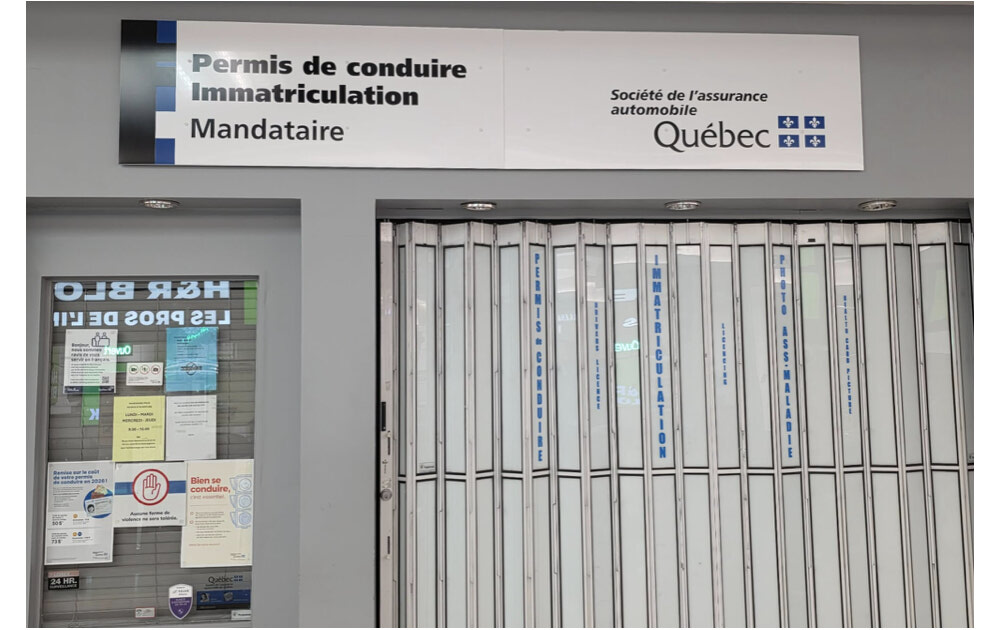
A public inquiry has concluded that Quebec’s automobile insurance agency mismanaged its $620-million digital overhaul, misled government officials and rushed the 2023 launch of SAAQclic despite unresolved risks, triggering widespread service disruptions for motorists. Photo: Tashi Farmilo
Inquiry blames governance failures for SAAQclic debacle
Tashi Farmilo
A public inquiry into the troubled launch of Quebec’s online driver and vehicle services has concluded that the Société de l’assurance automobile du Québec mismanaged its digital overhaul, concealed mounting costs and misled government officials before the system’s chaotic rollout in 2023.
The findings stem from a 566-page report released in February 2026 by Commissioner Denis Gallant, who was appointed in 2025 after months of public frustration over the failed launch of SAAQclic, the SAAQ’s online service platform.
For most Quebecers, the SAAQ is the agency they deal with to renew a driver’s licence, register a vehicle or obtain licence plates. It also administers Quebec’s no-fault automobile insurance plan, which compensates people injured in road accidents. In February 2023, when the agency introduced SAAQclic, after closing service centres for three weeks to prepare for the changeover, thousands of motorists encountered technical glitches, delayed transactions and long lineups at branches across the province.
The new system was part of a broader modernization effort known as the Carrefour des services d’affaires, or CASA. The project began more than a decade ago as the SAAQ sought to replace aging computer systems that were increasingly difficult to maintain. In 2017, the agency signed a contract worth $458 million with a consortium led by SAP and IBM subsidiary LGS to design and implement a new integrated system and maintain it for 10 years. Including internal costs, the planned investment was $375 million.
The inquiry found that by the time the system was deployed, investment costs had climbed to $620 million. It cited repeated redesigns, contractual disputes and a 2020 settlement with the private consortium as factors behind the increase. The commissioner concluded that the project was overly ambitious from the outset and carried risks that were not properly managed.
When SAAQclic went live on February 20, 2023, problems surfaced immediately. Online transactions failed or stalled. Service centres struggled to process basic requests. Lineups grew as clients who could not complete transactions online turned to in-person counters. The disruption lasted weeks and forced political leaders to step in publicly.
Gallant found that the launch proceeded despite incomplete testing and that senior SAAQ officials did not fully disclose the system’s readiness issues. The report states that executives provided misleading or incomplete information to ministers and to legislative committees about costs and progress. In some cases, the inquiry concluded, false information was deliberately transmitted.
The commissioner also examined what provincial authorities knew as costs rose and timelines slipped. While some officials received accurate warnings at certain stages, the report says the overall picture presented to government was fragmented and did not reflect the seriousness of the risks before launch.
The inquiry makes 26 recommendations, including the creation of a centralized body to oversee large digital projects across government, stricter rules for Crown corporation governance and stronger transparency requirements for major technology contracts.
Gallant concludes that restoring public confidence in government digital services will require structural reforms and clearer accountability between Crown corporations and elected officials. The Quebec government has not yet detailed how it will respond to the recommendations.